School Information


Contractions Page

Propaganda Info.

Resource Helps
Research Paper
Easy Bib Info.

Nothing But The Truth Information
Biography Project Info


Standards/Syllabus Information

Short Answer Question Format

Paragraph Writing Info.
Into the Decades
1900
1910
1920
1930 link assignment

Shakespeare Notes
Literature Circles

Searching and Researching on the Internet Assignment

Research One

Lost it? Get another. Link to Standards Document  9th / 10th


Go to the wiki for daily agenda information
www.carpwiki.wikispaces.com


Science Fair Project Helps

http://www.sciencebuddies.org/science-fair-projects/project_variables.shtml

http://school.discoveryeducation.com/sciencefaircentral/Getting-Started/Investigation.html

http://www.all-science-fair-projects.com/category0.html

http://www.juliantrubin.com/sciencefairprojectsaz.html


READING CONTEST!!! For every book you read in English, fiction or non-fiction, you can win an chance for great prizes each month at the flag raising ceremony. See your English teacher for the form to fill out.


Go here to this link for good practice on tenses: http://eslbee.com/cgi-bin/quiztest.cgi?sv_agreement
You can print it out and turn it in to me to help your grade.

4. Go to the site http://www.freerice.com/ and see how much you know about English grammar, vocabulary, and Spanish to English. Use your computer to learn and play at the same time!


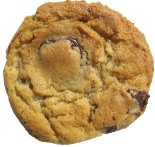
Click on the cookie for the recipe
for the best Chocolate Chip Cookies.


  Resource Helps (Where To Look on the Internet for Information)

Click here for Happy Birthday Research Project

Need help finding information on Georgia indians and explorers? Try these sites:

http://www.cviog.uga.edu/Projects/gainfo/gahist.htm
http://ngeorgia.com/history/nghisttt.html
http://ourgeorgiahistory.com/

http://ngeorgia.com/history/
http://www.infoplease.com/ipa/A0108201.html
http://www.netstate.com/states/intro/ga_intro.htm
Mississippians: http://bama.ua.edu/~alaarch/prehistoricalabama/mississippian.htm
Creeek Indians: http://ngeorgia.com/history/creek.html
http://roadsidegeorgia.com/links/american_indians/creek
Census data about the state is at: http://quickfacts.census.gov/qfd/states/13000.html
Cherokee Indians: http://www.cviog.uga.edu/Projects/gainfo/cheroke2.htm
http://www.geocities.com/bigorrin/cherokee_kids.htm

Links to helpful math pratice sites!!! Click Here.

Other Links:

Practice Your English
http://www.better-english.com/exerciselist.html (exercises to help you practice written and spoken English)
http://a4esl.org/ (grammar practice exercises that aren't totally boring)
http://www.aitech.ac.jp/~iteslj/quizzes/grammar.html (self-study grammar quizzes and actually fun ways to learn as well. Anything you struggle with you'll find a practice excercise here. Some are easy, and some are really challenging. Some are just for fun too.)
http://www.rhlschool.com/english.htm
http://owl.english.purdue.edu/owl/resource/677/01/
http://web2.uvcs.uvic.ca/elc/studyzone/
http://grammar.ccc.commnet.edu/grammar/
http://www.usingenglish.com/quizzes/
http://www.usingenglish.com/testing.html


http://www.funbrain.com/index.html (somewhat for kids, but fun anyway!)
http://www.mathgoodies.com/ (a math site that might help if you struggle in that area)  
http://www.historybuff.com/ (if you want to know about American History, this is really cool)
http://www.yourdictionary.com/ (a good web dictionary source for 210 different languages with over 30 multi-lingual dictionaries
http://www.freetranslation.com/ ( a free translation site that is generally good, but usually isn't always 100%; you'll get the general idea)
http://www.puzzlemaker.com/ (a source to help you create your own crossword puzzles just by plugging in your clues! Way easy!)
http://www.sehinton.com/ (web resoures for the novel, The Outsiders)
http://historymedren.about.com/index.htm?iam=metacrawl (interesting stuff about medieval life, living in a castle, Shakespearean times stuff)
http://gufs.highlands.com/library/page14.html (reference sites for all kinds of topics when you can't get to a library - encyclopedias, magazines, links to other resources)

Idiom Connection - site with quizzes to practice using idioms -   http://www.geocities.com/Athens/Aegean/6720/

Math and Language Arts Practice -
 http://www.globalclassroom.org/ecell00/javamath.html
http://grammar.ccc.commnet.edu/grammar/

Revolutionary War Unit Links

http://www.kn.pacbell.com/wired/fil/pages/listamericanmr39.html   (good general information links)

http://www.kidinfo.com/American_History/American_Revolution.htmlu

http://www.memory.loc.gov/ammem/gmdhtml (collection of all kinds of war maps)

http://www.revwar.com/links/document.html

http://library.thinkquest.org/11683/High.html

http://www.historyplace.com/unitedstates/revolution/

http://www.mce.k12tn.net/revolutionary_war/american_revolution.htm

Women in the American Revolution - http://userpages.aug.com/captbarb/femvets.html

http://www.historycentral.com/Revolt/

Little Known Facts Someone came up with about the War http://www.state.de.us/facts/ushist/revfacts.htm

If you're looking for a specific topic, look here  http://www.historesearch.com/amrevmil.html

Quotes offering opionions on the war http://www.revolutionary-war.info/quotes/

http://library.thinkquest.org/TQ0312848/quotes.htm

http://www.rightwingnews.com/quotes/revolution.php

Civil War Links
The City of Atlanta, cerca 1860

Women of the Civil War -
http://scriptorium.lib.duke.edu/women/cwdocs.html#other
http://www.geocities.com/Heartland/4678/kate.html
http://userpages.aug.com/captbarb/femvets2.html

General Civil War Information:
http://sunsite.utk.edu/civil-war/warweb.html
http://www.civilwar.com/
http://americancivilwar.com/
http://www.civil-war.net/
http://americancivilwar.com/civil.html
http://library.thinkquest.org/3055/netscape/

Music of the Civil War
http://www.pdmusic.org/civilwar.html

Primary Sources for stories and letters from Civil War participants
http://etext.virginia.edu/civilwar/

A good timeline of the war from beginning to end
http://www.historyplace.com/civilwar/index.html

<>Photographs of various sites in the Civil War - you have to look a little, but a lot of stuff here
http://international.loc.gov/ammem/cwphtml/cwphome.html
http://www.wildwestweb.net/cwphotos2.html

*These sites can still have hidden links attached to go to inappropriate sites because of the freedom of access on the internet. Always monitor your students when they are surfing the web, even with school assignment to avoid these situations. 
  Creating Bibliography Pages:
You need one for every paper/project you do to cite your sources. Why? So you give credit to those that gave you your information, and for others to know where to look if they want to know more.
Two online resources to create a bibliography:
www.easybib.com - you can't save the information in the free version, but if you only have a couple sources and can save in your own file, it is good.
www.noodletools.com - very easy to follow; you set up an account and it creates lists for you and saves them so you can come back to them later. It also has an easy 'save as Word document' and 'email' features.


Recommended Reading List
The following are books that are available in the library that I would recommend for your independent reading project or if you are just looking for something good to read! They are a variety of grade levels and interests.

The Cay  (T. Taylor) - great adventure about a shipwreck that strands a boy and old man on an island.
Bridge to Terabithia (K. Patterson) -a  story about an unusual friendship that shows the realities of life
The Secret Garden (F. Burnett) a tale that lets us all remember having secrets and adventures
A Wrinkle in Time (M. L'Engle) a story that makes you wonder about life and why we're here
Roll of Thunder, Hear My Cry (M. Taylor) a little hard to follow because of the Southern dialect, but a great story of life in the South and the difficulties the blacks faced in a changing and unchanging world.
To Kill a Mockingbird (H. Lee) a classic must read with humor, drama, and action you wouldn't expect
Death be Not Proud (J. Gunther) a true story of a youth boy dying of cancer
I Never Promised You a Rose Garden (J. Greenberg) a look into the problems of mental illness
Ordinary People (J. Guest) what happens when an ordinary family starts to fall apart
The Princess Bride (W. Goldman) comedy at its peak with intelligent humor
The Color Purple (A. Walker) a great story and movie of dealing with the hard blows that life can deal you and still having something worthwhile in the end; and your pride
Death of a Salesman (A. Miller) a drama
A Raisin in the Sun (L. Hansberry)
Animal Farm (G.Orwell) animals are much more like people than you might think in this political satire
Lord of the Flies (W. Golding) a favorite with a great movie adaption; shipwrecked boys from a military school have to survive on a deserted island from the elements and each other
The Jungle (U. Sinclair) a story of the horrors and tragedies in the meatpacking industry in the U.S. before any regulations and restrictions
The Old Man in the Sea (E. Hemingway) a classic struggle between man and animal
Fahrenheit 451 (R. Bradbury) a scfi book that shows how too much control of individuals creates a society you might not want to live in
Island of the Blue Dolphins (S. O'Dell) a girl book, a little romance, again stuck on a deserted island
My Side of the Mountain (J. George) living and surviving in the outdoors, realizing what's important
The Joy Luck Club (A. Tan) a young girl sees the traditions of her culture and why they change and don't change
The Lion, the Witch, and the Wardrobe (C.S. Lewis)
The Scarlet Letter (N. Hawthorne) a woman is branded with the A because of her actions, but there is much that she doesn't tell
The Voyage of the Frog (G. Paulsen) an easy fun read about a boy and his journey on a boat that isn't a typical journey
The Watsons go to Birmingham (C.P. Curtis)
Little Women (L. Alcott) the adventures of a family of sisters and their interactions with each other
any books by Judy Blume good stories about a middle school girl growing up

Mr. Popper's Penguins (Atwater) a silly story about a family that has some penguins come to live with them
Tangerine (E. Bloor) story of a young boy who has to deal with being different and causes unusual things to happen in his new town
Driver's Ed (Cooney) mystery, suspense - a young girl realizes there is more to driver's ed when tragedy strikes
Julie of the Wolves (George) a young girl proves herself in the wilderness of Alaska
Walkabout (James Marshall) two kids get lost in the Australian wilderness and have to survive
Middle School Blues (Kassem) fun read about a girl and the problems with middle school
The Thorn Birds (McCullough) a saga of a family trying to make a living in Australia. Follow the family as they travel the globe, win and lose at love, and eventually the dark secrets come out.


 Organizing Information and Essay Writing

Hints for organizing an essay:
1. Look for the catchy phrase or opening that introduces the subject.
2. Look for the topic sentence that tells the three areas the essay will be talking about.
3. Find the first detail sentence talked about in #2.
4. Find the second detail sentence talked about in #2.
5. Find the third detail sentence talked about in #2.
REMEMBER: If there is more than one detail sentence for that area, order them in a logical way, with the one that introduces the other first.
6. Look for the conclusion sentence that mentions the three areas again.
7. Finally, look for an opinion, a summing up of the essay, suggestion, etc. that leaves you thinking about the topic.

Here is a practice essay. The correct order is listed at the end. Practice first before looking at the answers.

Organize the following information so that it could be used to write a paper about the essay question,

"Why Living at the Top of a Mountain is Bad"

Put the correct order that the sentences should be used in from introduction to conclusion.


_____ The food at the top of a mountain is very scare and you will probably only find some moss, a couple rocks, and some really tough insects.

_____ So if you are thinking about moving, maybe you should check into other options that have a little more to offer.

_____Living at the top of a mountain is a bad place to be because of the food, weather, and variety of friends.

_____ Usually the weather is very bad every day with strong winds, lots of clouds, and extremely cold temperatures. Bring your mittens!

_____Have you ever thought about moving and thought that it looked wonderful and peaceful at the top of a mountain? Think again!

_____The peaks of the mountains only hold loneliness and solitude, unless you can find a stray angry mountain goat to be your pet.

_____ The tops of the mountains look very inviting, but it would be better to take your chances at the bottom of the sea or the depths of the rain forest if you want any kind of real friends, food, and livable climate.

_____Tired of friends that are shallow and uncaring? You won´t have to worry about friends here!


Click here for other practice paragraphs!


OTHER CLASS RESOURCES...


  If you need a copy of The Ketchup Bottle play CLICK HERE!


Shakespeare Links

Other information about Shakespeare:

http://absoluteshakespeare.com/
http://www.theplays.org/
http://www.allshakespeare.com/plays/
http://the-tech.mit.edu/Shakespeare/Tragedy/romeoandjuliet/romeoandjuliet.html (the play online)
http://allshakespeare.com/plays/romeo/ (information about Romeo and Juliet)
http://shakespeare.palomar.edu/ (everything you wanted to know about Shakespeare but were afraid to ask!)


Literature Circle Information Link - 

<>
  Curriculum Syllabus

Freshman Language Arts - 9th

  A - Listening, Speaking and Viewing
 
1.  apply interviewing techniques (i.e., prepare and ask relevant questions; make notes of responses; use language that conveys maturity, sensitivity and respect; respond correctly to questions) and listen to an interview to acquire information  
<> 

 
2.  observe, listen critically to and respond to written and oral communication in a variety of genres and media

 3.  acquire increased vocabulary through listening and demonstrate that vocabulary through speaking   

4. recognize speaker's purpose and identify verbal and nonverbal components of communication

    read with rhythm, flow and meter that sounds like everyday speech

5. deliver oral presentations (narrative, expository or persuasive) that incorporate the same elements found in that mode or genre of writing 

6.  take notes from lectures, reading, viewing and interviewing

7.  present information through reports, demonstrations and projects

  B - Reading/Literature (Comprehension, Strategies and Genre)

   1. read for a variety of purposes in all content areas; expect reading to make sense, to answer questions or to stimulate ideas

  2.  relate a literary work to non-literary and/or other texts from its literary period and historical setting

  3.  distinguish between statements of fact and statements of opinion

4.    summarize and paraphrase literary and informational text

 5.   evaluate information from common graphic features (i.e., graphic organizers, diagrams, captions, illustrations)

<>6.    evaluate quality of reading material and its content based on author's purpose, meaning and structure

<>7.    read to identify elements of various genres including drama, novels, short stories, poetry, nonfiction, technical writing and satire

8.    analyze plot and theme across genres

  9.  identify and analyze imagery, sensory language, exaggeration, symbolism, foreshadowing and irony

10.    identify, analyze and apply knowledge of the structures and elements of literary and informational texts, including poetry, memoir, biography, autobiography and essay  

  C - Reading (Vocabulary)

   1.  expand vocabulary through reading in all content areas, etymology and the use of dictionaries and other references

   2.  use context clues to identify unknown words while reading

  3.   use Greek and Latin prefixes, suffixes and roots to identify meaning and structure of words

  4.  use idioms, cognates, words with literal and figurative meanings and patterns of word changes that indicate different meanings or functions

  5.  use dictionary, glossary, thesaurus, electronic and other references to identify word meanings    

  D - Reading Across the Curriculum

   1. identify messages and themes from books in all subject areas and relate from one subject area to another

  2.  identify messages and themes from books in all subject areas and relate from one subject area to another

  3. evaluate the effectiveness of texts in every subject area

  4.  use strategies for finding content and contextual meaning for unfamiliar words or concepts

5.  recognize the features of content area texts  

  E - Writing (Strategies)

   1. prewrite, draft, revise and edit writing to improve fluency, content, organization and style (writing process)

  2.  produce writing (including multi-paragraph, narrative, expository and persuasive with the focus on technical) that establishes an organizational structure appropriate to purpose, audience, content and type of composition

 3.   edit for spelling, fragments, run-on sentences and parallel structure

 4.   use writing handbooks, grammar check and references to edit usage and mechanics

5.    establish a clear, coherent thesis or controlling idea with examples, illustrations, facts and details

 6.   use logical and effective transitions between ideas and paragraphs

  7.  write to develop answers to research questions

  8.  document sources of quotations, ideas and facts

9.    incorporate reference quotations and citations into written text while maintaining the flow of ideas through the use of synthesizing information and summarizing to avoid plagiarism

10.    use technology and research to support writing  

 11.   establish voice through tone, word choice, rhetorical devices and literary devices

  F - Writing (Grammar, Usage and Mechanics)

  1.  identify and use sentence patterns

  2.  identify and use phrases, clauses, appositives and parenthetical expressions 

   3. use standard conventions of American English

   4. use appropriate forms of plurals, possessives and plural possessives

   5. use present, past and future verb tenses to match intended meaning

  6.  maintain consistent number, gender, point of view and verb tense  

 7.   use independent clauses, dependent clauses and complements to clarify ideas

  8.  use hyphens to divide words, in fractions and to form combined-word adjectives before a noun

  9.  use quotation marks to punctuate dialogue and titles  

  10.  capitalize nationalities and languages    

 11.   use dictionaries, glossaries, texts, spell check, grammar check and human resources to identify standard spellings

  G - Accessing Information/Reference Skills

    1. use table of contents, index, glossary and appendix to locate information in books and reference works

   2. use table of contents, index, glossary and appendix to locate information in books and reference works

   3. use research venues to gather information: books, periodicals, dictionaries, thesauri, encyclopedias, atlases, almanacs, CD ROM, databases and Internet

  4.  use a study-reading strategy to study content area texts

   5. select and narrow topic and research questions

  6.  outline information


Sophomore Language Arts - 10th Grade

  A - Listening, Speaking and Viewing

<>    1.  observe, listen critically to and respond to written and oral communication in a variety of genres and media

   2. listen to take notes, formulate questions and make inferences and judgments

  3.  deliver narrative, expository or persuasive presentations that incorporate the same elements found in that mode or genre of writing

  4.  acquire increased vocabulary through listening and demonstrate that vocabulary through speaking

  5.  recognize speaker's purpose and identify verbal and nonverbal components of communication

  6.  analyze four basic types of persuasive speeches (i.e., propositions of fact, value, problem or policy)

  7.  analyze historically significant speeches to find rhetorical devices and features that make them memorable

  8.  read with rhythm, flow and meter that sounds like everyday speech

9.    take notes from lectures, reading, viewing and interviewing

 10.   present information through reports, demonstrations and multimedia projects

  B - Reading/Literature (Comprehension, Strategies and Genre)

1. read for a variety of purposes in all content areas; expect reading to make sense, to answer questions or to stimulate ideas

  2.  evaluate quality of reading material and its content based on author's purpose, meaning and structure

 3.   evaluate writing relative to student's own purposes for reading

  4.  relate a literary work to non-literary and/or other texts from its literary period and historical setting

  5.  relate a literary work to non-literary and/or other texts from its literary period and historical setting

 6.   read to identify characteristics of various genres including drama, novels, short stories, poetry, nonfiction, technical writing, satire and parody

 7.   analyze plot and theme across genres

  8.  analyze characterization (dynamic and static) in prose and plays through all characters (thoughts, words and actions) and the narrator's description

   9. identify and analyze imagery and sensory language

  10.  identify and analyze hyperbole, irony, foreshadowing and personification

 11.   identify aside, assonance, connotation, image, monologue, paradox, pun, satire and soliloquy

  12.  identify, analyze and apply knowledge of theme in literary works

  C - Reading (Vocabulary)

   1. expand vocabulary in all content areas through reading, etymology and the use of dictionaries and other references

  2.  identify synonyms, antonyms and multiple meanings for given words

    3.construct and solve word analogies based on connotation and denotation

  4.  use idioms, cognates, words with literal and figurative meanings and patterns of word changes that indicate different meanings or functions

   5. use context clues to identify unknown words while reading

  6.  use Greek and Latin prefixes, suffixes and roots to identify meaning and structure of words

   7. use dictionary, glossary, thesaurus, electronic and other references to identify word meanings   

  D - Reading Across the Curriculum

   1. identify messages and themes from books in all subject areas and relate from one subject area to those in another area

    2.evaluate the effectiveness of texts in every subject area

   3. use strategies for finding content and contextual meaning for unfamiliar words or concepts

   4. recognize the features of content area texts   

  E - Writing (Strategies)

    prewrite, draft, revise and edit writing to improve fluency, content, organization and style (writing process)

    produce writing (including multi-paragraph, expository and technical with the focus on persuasive) that establishes an organizational structure appropriate to purpose, audience, content and type of composition

    use writing handbooks, grammar check and references to edit usage and mechanics

    establish a clear, coherent thesis or controlling idea with examples, illustrations, facts and details

    use logical and effective transitions between ideas and paragraphs

    maintain unity and coherence

    write to develop answers to research questions

    incorporate reference quotations and citations into written text while maintaining the flow of ideas through the use of synthesizing information and summarizing to avoid plagiarism

    incorporate reference quotations and citations into written text while maintaining the flow of ideas through the use of synthesizing information and summarizing to avoid plagiarism

    compose letters to editors which include clearly-defined position and supporting evidence

    establish voice through tone, word choice, rhetorical devices and literary devices

    use technology and research to support writing    

  F - Writing (Grammar, Usage and Mechanics)

   1. identify coordinating, correlative and subordinating conjunctions

   2. distinguish among simple, compound, complex and compound-complex sentences

  3.  distinguish between active and passive voice  

    use passive and active verbs to match purposes

    use phrases, clauses, appositives and parenthetical expressions

    identify and use independent and dependent (subordinate) clauses

    use standard conventions of American English

    use present perfect, past perfect and future perfect verb tenses to match intended meaning

    maintain consistent number, gender, point of view and verb tense

    use apostrophes to form plurals of letters, numbers and signs; in place of omitted numbers or letters; and in plural and shared possessives

    use quotation marks to set off references to words

    use dictionaries, glossaries, texts, spell check, grammar check and human resources to identify standard spellings

  G - Accessing Information/Reference Skills

    use research venues to gather information: books, periodicals, dictionaries, thesauri, encyclopedias, atlases, almanacs, CD ROM, databases and Internet


return to home page